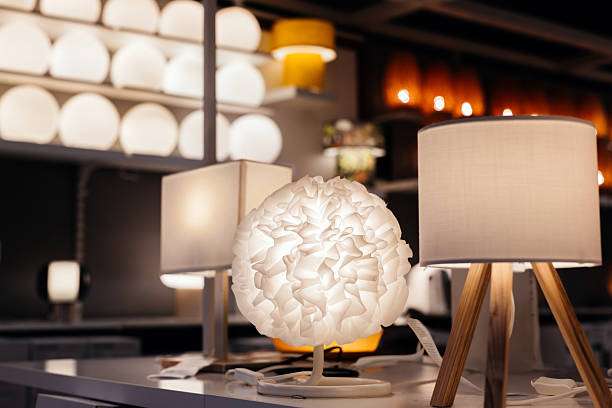
4 harsh realities about lamp shades: Difficulty in cleaning is shortening their actual lifespan.

Many people think that lamp shades are “broken,” but they have actually been abandoned.
In most homes, lamp shades often need replacing without warning. It’s not because the lamp shades are actually broken, aged, or structurally ineffective, but because they “look too dirty.” A layer of yellowish oil film, a ring of dust shadows that can’t be wiped off, and a surface that becomes increasingly blurry with each wash can all create a strong illusion that the lamp shades are no longer viable.
However, from the perspectives of material lifespan, structural strength, and optical performance, the vast majority of discarded lamp shades are still in a usable stage. What truly shortens the actual lifespan of lamp shades is not time, but the psychological abandonment caused by the difficulty of cleaning them.
Lamp shades aren’t worn out; they’re simply “disliked.” Understanding this is the first step to seeing the harsh reality of lamp shades.
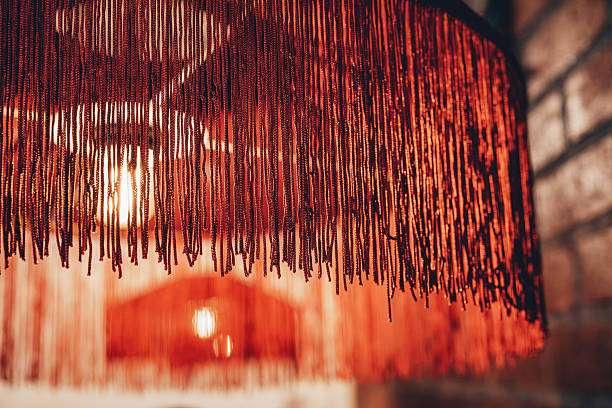
The First Reality: The Fact That Lamp Shades Age Much Faster Than You Expect is Not a Material Issue.
Many people find that lampshades start to darken, discolor, and become unevenly transparent after a short period of use, and their first reaction is often that the material is of poor quality. However, in reality, the theoretical lifespan of most lamp shade materials is far longer than the actual lifespan of household use. What truly causes premature visual aging is the cumulative effect of pollutants and cleaning methods.
Lampshades occupy an extremely awkward position. They are neither cleaned as frequently as floors nor completely ignored like high walls. They are located in one of the areas with the most active air convection. Oil fumes, dust, moisture, and tiny fibers all linger and accumulate on the surface of lampshades.
The problem is that this contamination doesn’t happen all at once. It forms an extremely thin yet persistent composite layer on the surface of lamp shades. This mixture gradually alters the microstructure of the lampshades’ surface, making the originally smooth surface rougher and thus more prone to attracting the next round of dust.
By the time people realize that lamp shades are “getting dirtier and dirtier,” the difficulty of cleaning them has actually increased several times over. This delayed effect can make people mistakenly believe that lamp shades have suddenly aged, when in fact aging has already been happening imperceptibly.
A Second Reality: The Act of Cleaning Itself is Quietly Harming Lamp Shades.
Cleaning lamp shades may seem like a simple task, but it’s actually one of the biggest killers of lamp shade lifespan. The problem isn’t whether to clean them, but whether the cleaning method matches the lamp shade material.
Many lamp shades rely on microstructures on their surfaces to achieve diffuse light reflection. These structures are invisible to the naked eye but are crucial for light control. These microstructures are gradually worn down when people use overly rough cloths, cleaning agents containing abrasive particles or wipe repeatedly at high frequencies.
The result is that while the lampshades appear to have been “cleaned up,” they can never return to their original translucent state. The light begins to diffuse unevenly, with more localized bright spots and harsh shadow boundaries. Users will intuitively feel that the light has become glaring, cheap, and uncomfortable.
This change could easily be mistaken for a bulb problem or a design flaw, but the root cause is actually irreversible damage to the lampshade’s surface during the cleaning process. Even worse, once this damage occurs, it cannot be repaired by any cleaning method.
People clean the lampshades frequently in an attempt to “save” their appearance but unknowingly accelerated their retirement.
A Third Reality: The Difficulty of Cleaning Is Changing People’s Perception of the Value of Lamp Shades.
Whether an item is kept depends not on whether it is still usable, but on whether it is “worth continuing to be cared for.” Lamp shades are a typical example of this.
When cleaning lampshades becomes a laborious, time-consuming, and unpredictable process, their perceived value diminishes rapidly. Even if the lamp shades themselves are not cheap, people may start to think, “Forget it, I’ll just get a different one.”
This psychology is irrational, yet extremely real. The more difficult something is to clean, the more people tend to underestimate its remaining value. Lamp shades, once a functional component, have gradually come to be seen as “troublemakers.”
More subtly, this psychological shift can in turn influence usage patterns. People may reduce the time they turn on the lights or even change the position of the light source because they are too lazy to clean them. These behaviors further exacerbate localized aging on the lamp shades surface, making appearance problems more noticeable.
Ultimately, lamp shades weren’t phased out because they were unusable, but because they became a burden. This is a very harsh but widespread reality.

The Fourth Reality: Ignoring Cleaning During the Design Phase is Tantamount to Setting a Lifespan Limit in Advance.
Many lamp shades are designed with little to no consideration for cleaning. Their complex shapes, deep textures, and multi-layered structures may be visually appealing, but they can create problems during use.
These designs create numerous hard-to-reach corners. Dust accumulates in these areas but cannot be effectively cleaned. Over time, these corners become visual focal points, and even if the overall area isn’t dirty, people are repeatedly reminded of these localized problems.
Even more seriously, some lamp shades require complete disassembly for cleaning, and the disassembly process itself carries risks. People either give up on cleaning because it’s too much trouble, or they damage the structure during disassembly and reassembly, leading to a decrease in the stability of the lampshades.
When the design doesn’t consider the feasibility of long-term maintenance, the actual lifespan of lamp shades is locked at a level far below the material’s limits. It’s not that users are unwilling to maintain them, but rather that the design itself doesn’t allow them to do so easily.
From this perspective, the lifespan of lamp shades is not shortened during use but rather preempted during the design phase.
Why Something That “Looks Dirty” Can Be More Deadly Than Something That “Is Actually Bad.”
In a home environment, visual experience often takes precedence over functional judgment. When the appearance of lamp shades begins to affect the overall feeling of the space, its functional value is quickly diminished.
Even if the light intensity is normal and the structure is stable, if the lamp shades look old, dark, or unclean, people will subconsciously judge the entire lighting system as “outdated” and “uncomfortable.” This judgment is almost never based on rational analysis.
The cruel reality of cleaning is that it doesn’t immediately destroy lampshades, but it continuously diminishes one’s patience with them. And patience is precisely the most important resource for extending their lifespan.
The Lifespan of Lamp Shades is Determined by Their “Maintainability.”
Strictly speaking, lampshades don’t have a fixed lifespan. What truly exists is a “discard threshold” determined by maintenance costs, cleaning experience, and psychological expectations.
When cleaning becomes easy and the results are predictable, people are willing to continue using it; when cleaning becomes difficult and the results are inconsistent, people will start to consider switching.
This is why some seemingly ordinary, simple lamp shades can be used for many years, while some complexly designed, exquisitely crafted lamp shades are phased out in a short period of time.
They didn’t succumb to time, but rather to the difficulty of cleaning.
In Conclusion: Lamp Shades Are Not Consumables, But They Are Being Used as Such.
Lamp shades shouldn’t be items that need frequent replacement. Their materials, structure, and function all support long-term use. But the reality is that the difficulty of cleaning them is quietly pushing them towards the fate of consumables.
When we re-examine the lifespan of lamp shades, perhaps we shouldn’t just focus on the material and price, but ask a more realistic question: In the next few years, am I willing to clean this lamp shade repeatedly?
FAQ
Question 1: How often should lamp shades be cleaned?
Frequency isn’t the key factor; the key is preventing the long-term buildup of contaminants. Light, regular maintenance is far more beneficial for extending lamp life than occasional heavy cleaning.
What are the most common mistakes when cleaning lamp shades?
Using cleaning tools that are incompatible with the material is the most common mistake. Excessive force and repeated rubbing can cause irreversible damage more easily than the dust itself.
Question 3: Are complexly designed lamp shades necessarily not durable?
Not necessarily, but they do require a higher level of maintenance from the user. If the cleaning difficulty exceeds the user’s acceptable level, their actual lifespan will often be significantly shortened.