Lamp Shades: 4 Types of Light and Shadow in Psychology: How Light and Color Subtly Influence Emotions and Sleep

First, light is not merely seen; it is being “read” by the brain.
In everyday understanding, the role of light is often limited to “illuminating space.” However, in neuroscience and environmental psychology, light is never a passive background element, but a signal actively interpreted by the brain.
When light enters the eye, it doesn’t just remain in the visual cortex; it passes through specialized photoreceptor cells in the retina, directly affecting areas closely related to emotions and hormone secretion, such as the hypothalamus. This is why light not only changes the world we see but also continuously shapes our emotional state and circadian rhythms.
In this process, the role of lamp shades is often severely underestimated. The light source merely provides energy; lamp shades are the key medium that truly determines the “personality” of light as it enters the brain. Changes in color, transitions between light and dark, and the perception of soft or sharp boundaries almost all pass through this psychological filter of lamp shades .
II. The First Type of Light and Shadow Psychology: How Warm Light Creates a Sense of Security and Relaxation
Warm light is the earliest artificial lighting environment familiar to humankind. From campfires and oil lamps to incandescent bulbs, low color temperature light has long accompanied human rest, eating, and social activities. This historical experience makes the brain naturally inclined to relax and trust when faced with warm light.
However, it’s important to note that what truly makes warm light psychologically effective is not just the color temperature parameter of the bulb, but the secondary shaping of the light color by lamp shades . Warm light without lamp shade adjustment may still appear glaring or locally too bright, thus weakening its calming effect.
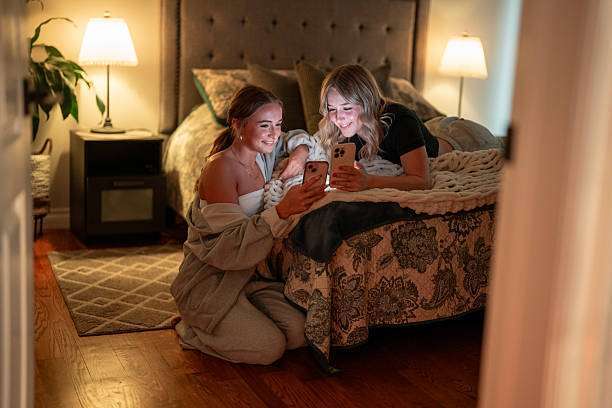
Warm light filteredthrough appropriate lamp shades creates a uniform and soft light field in the space, with blurred edges and natural transitions between light and dark. This lighting environment reduces the alertness of the nervous system, gradually slowing down heart rate and breathing rhythm.
In bedrooms, dining rooms, and resting spaces, lamp shades reduce the proportion of direct light, making warm light less aggressive and more like a gentle embrace. This is the prerequisite for warm light to truly exert its psychological effect.
III. The Second Kind of Light and Shadow Psychology: How Cool Light Activates Rationality and Alertness
In contrast to warm-toned light, there is cool-toned light. Cool-toned light is often considered more “professional” and “efficient,” and is widely used in office and study settings. This perception is not accidental, but stems from how cool-toned light stimulates the brain.
Cool-toned light has a higher proportion of blue light, which inhibits melatonin secretion, keeping people alert and alert. This physiological response is beneficial during the day, but can have negative effects at night.
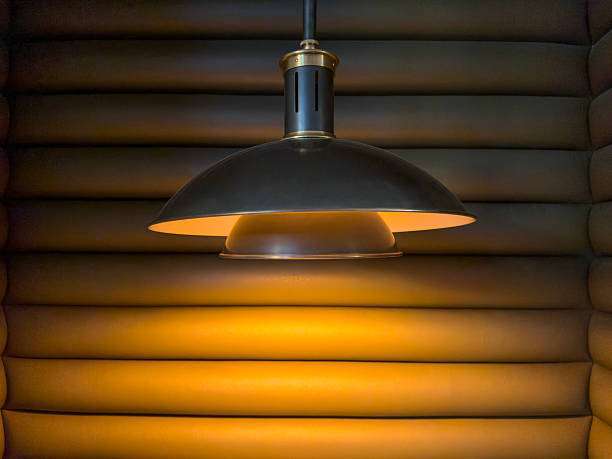
Lamp shades play a particularly crucial role in cool-toned light environments. Without sufficient diffusion and buffering, cool-toned light can easily create strong contrast, leading to persistent visual tension. While concentration may improve in the short term under such light, long-term use can easily cause fatigue, irritability, and even sleep disorders.
Properly designed lamp shades can soften the sharpness of cool-toned light while maintaining its clarity. By breaking down the edges of the light, cool light no longer feels like a command, but rather like support. This approach strikes a balance between rationality and comfort.
IV. The Third Kind of Light and Shadow Psychology: Uniformity of Light is More Important than Brightness
Many people mistakenly believe that emotions are influenced by light primarily because of its brightness. However, the brain’s response to light largely depends on its stability and uniformity.
When there are obvious bright spots, dark corners, or strong contrasts in light and shadow in a space, the brain constantly makes visual adjustments. This continuous fine-tuning consumes attentional resources, creating a subtle sense of tension, even if not consciously perceived.
Lamp shades play a psychological role here by making light “reliable.” Through their diffused structure, lamp shades allow light to spread evenly throughout the space, avoiding localized stimulation.
This uniform lighting environment sends an implicit signal to the brain that the environment is stable and doesn’t require constant vigilance. In such lighting, people are more likely to relax and experience better emotional recovery.
V. The Fourth Kind of Light and Shadow Psychology: How Nighttime Light Subtly Affects Sleep Rhythms
Sleep is not simply turning off the lights; it’s a gradual shift in a whole set of physiological rhythms. Light plays a crucial role in this process.
As night falls, the brain gradually increases melatonin secretion based on changes in light intensity and color, preparing for sleep. If lamp shades cannot effectively control the light, even low brightness can interfere with this process due to direct light or an excessive proportion of blue light. The core task of lamp shades at night is to “slow down” the light. By increasing the reflection and diffusion paths of light and reducing direct stimulation, light enters the field of vision in a gentler way.
This slowed-down light is interpreted by the brain as a signal of dusk or night, thus aligning with the physiological rhythm to enter rest mode. This is why many people feel significantly more able to fall asleep after changing their lamp shades , yet cannot explain why.
VI. How lamp shades unconsciously shape emotional experiences
It’s worth noting that the effects of lamp shades on mood and sleep often occur unconsciously. People rarely consciously “feel ” lamp shades , yet they directly perceive whether a space is comfortable.
This difference in experience is the most subtle aspect of the psychology of light and shadow.
Lamp shades , by altering the form of light, evoke different emotional judgments about a space. These judgments are not based on rational analysis, but rather on an instinctive reaction completed by the brain in a very short time.
When the light is soft, stable, and non-aggressive—meaning it’s neither too intense to cause glare or discomfort, nor flickering or swaying—people tend to feel a sense of security and trust in such an environment. This sense of security is like being in a warm and safe harbor, allowing for relaxation; while trust makes people more relaxed and at ease, facing their surroundings with a more peaceful mindset.
Conversely, even if the light appears very bright, any instability such as sudden flickering, inconsistent brightness, or swaying will automatically put the brain into a state of alertness. The brain is acutely aware of these unstable changes in light, as if sounding an alarm, remaining constantly vigilant against potential dangers. It is at this level that
lamp shades subtly influence a person’s emotional tone.
7. Why do the same light bulbs show such large differences under different lamp shades ?
Many people find that after changing light bulbs, the effect is not as expected, or even completely different from what they imagined. This discrepancy is often not a problem with the bulb itself, but rather with the reprocessing of light color and structure by
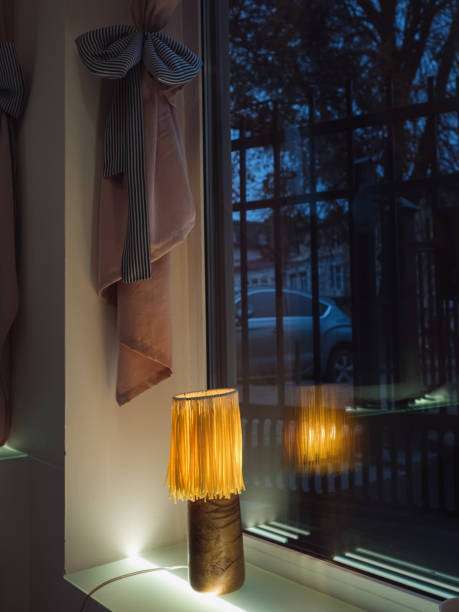
lamp shades . Lamp shade materials have varying transmittance for different wavelengths of light, meaning that lamp shades subtly alter the color tendency of the light.
Furthermore, the surface condition of the lamp shades also affects the sharpness of the light edges, thus changing the emotional expression of the space. The same warm light might appear tense with sharp edges, but gentle with softened edges.
Understanding this is key to truly understanding why lamp shades are irreplaceable in mood lighting.
8. Long-term lighting environment is shaping people’s emotional habits.
The influence of the psychology of light and shadow is not limited to a single, fleeting moment; it doesn’t simply work for a specific instant. In fact, it shapes a person’s emotional habits slowly and continuously over a long period.
This shaping is a subtle process, imperceptibly altering people’s emotional response patterns in various situations.
Specifically, people who spend long periods in soft, evenly lit environments experience better nourishment for their physical and mental well-being under these comfortable lighting conditions. Soft, even light does not overstimulate the eyes and nervous system, allowing people to live and work in a relatively relaxed state.
In such an environment, people are more likely to maintain emotional stability, their minds as calm as a still lake, undisturbed by ripples. Furthermore, a good lighting environment also helps improve sleep quality, enabling people to fall asleep more soundly at night and enter a state of deep sleep, thus waking up the next day with renewed energy.
Conversely, if a person is exposed to chaotic and highly stimulating lighting for a long period, although there may be no obvious discomfort in the short term and the body may seem to be able to tolerate such lighting conditions, in the long run, this unfavorable lighting environment will gradually have a negative impact on a person’s physical and mental health.
The nervous system will gradually become fatigued and sensitive under such chaotic and intense light stimulation. Even if no obvious symptoms are manifested on the surface, mood swings may gradually occur unconsciously, such as becoming more irritable, anxious, or depressed.
At the same time, the body will also experience fatigue due to continuous stress responses, making one feel constantly listless and affecting efficiency in life and work.
Lamp shades act as an “ambient tuner” in this long-term process. They determine whether the light is consistently gentle or repeatedly stimulating.
In conclusion: Lamp shades are not just decorations, but invisible switches that control mood and sleep.
the four principles of light and shadow psychology lies not in complex theories, but in a simple fact: light continuously influences human emotions and sleep, and lamp shades determine the way this influence manifests.
When we realize that lamp shades are not merely optional decorations, but design products deeply involved in the psychological experience, we gain a new understanding of the relationship between light and life.
Truly good lamp shades are not conspicuous, but subtly and unconsciously make people more relaxed, more at ease, and fall asleep more easily. This is the most authentic and powerful manifestation of light and shadow psychology.
FAQ
- Can an aged lampshade be restored by polishing or cleaning?
In most cases, no. Once a large number of micro-damages occur on the surface of the lampshade, its optical structure has been damaged. Even if polishing makes the surface look brighter, it is difficult to restore the original light transmission and diffusion properties, and may even further weaken the material strength.
2. Is mood lighting only related to the color temperature of the bulb?
Not at all. The bulb determines the properties of the light source, while the lampshade determines how the light enters the space. Mood lighting without a suitable lampshade is unlikely to be truly effective. The key to mood lighting is that the lampshade “slows down” the light, allowing it to be perceived in a gentler way.
3. How to determine if a lampshade is suitable for long-term use?
A lampshade suitable for long-term use will not attract attention in daily life, but will still make people feel comfortable when spending a long time in the space. It will not be dazzling, will not easily produce glare, and the light will be stable and have natural layers. If you still feel relaxed in the space and your eyes are not tired after using it for a period of time, it usually means that the lampshade’s parameters are reasonable.