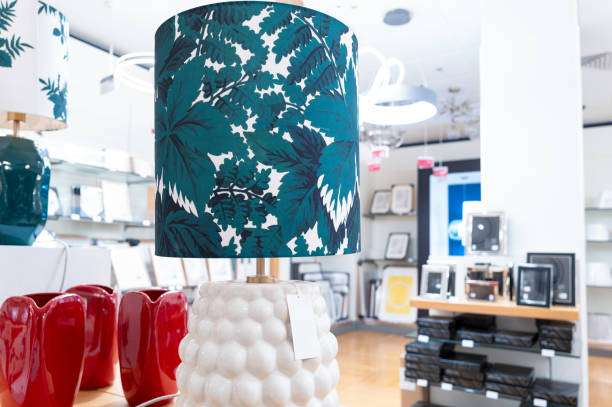
6 hidden costs of lamp shades : The high maintenance costs are rarely mentioned before purchase.

What’s underestimated about lamp shades isn’t their price, but their cost.
When buying light fixtures, most people only care about three things: how good they look, how bright they are, and how expensive they are. Lamp shades are often treated as accessories and simply categorized as “aesthetic choices.” They seem to have no power, no heat, and no weight-bearing capacity, so there doesn’t seem to be any risk involved.
But after actually using them, many people gradually realize that lamp shades are the part of a lighting system most prone to causing regret. It’s not because they’re unattractive, but because they start to consume time, energy, and patience, and can even change your perception of the entire space.
lamp shades is never the initial price, but the daily maintenance costs. What’s even more disheartening is that these costs are almost never disclosed to you before purchase.
The first hidden cost: the frequency of cleaning is severely underestimated.
lamp shades may appear to hang quietly, they are actually located in areas with the most frequent air movement. Hot air rises, cold air flows back, and fumes, moisture, dust, and fibers create complex convection paths around the lamp shades .
This means that the dirt on lamp shades doesn’t increase linearly but rather accelerates. By the time you think it’s “not time to wash,” a barely perceptible layer of complex contamination has already formed on the surface. This layer not only affects the appearance but also alters how lampshades refract and diffuse light.
The problem is that most people don’t consider how often they need to clean their lamp shades when making a purchase decision. Only after actually using them do they realize that the cleaning frequency is much higher than expected, and each cleaning session represents an expenditure of time and effort.
This misjudgment in frequency is the first point of entry for hiding costs in lamp shades .
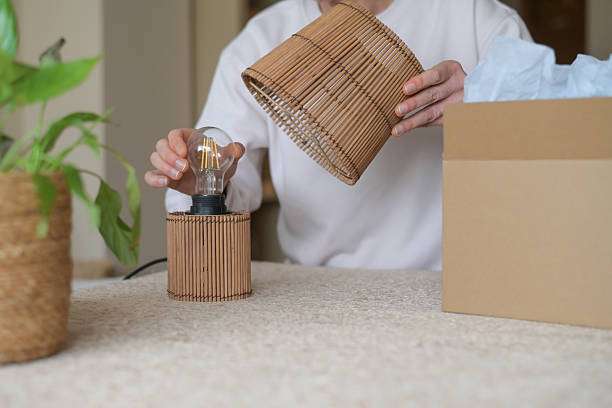
The second hidden cost, cleaning difficulty, is directly linked to structural design.
Not all lampshades are equally easy to clean. The more complex the shape, the higher the maintenance cost; this is an almost irreversible rule.
Multi-layered structures, deep textures, enclosed cavities, and intricate decorations—these designs, so appealing on the display page, often mean a cleaning nightmare. Dust gets stuck in places you can’t reach, and grease adheres to the curved inner surfaces you can’t wipe.
A more practical problem is that many lamp shades don’t support easy disassembly. Cleaning means working at heights, worrying about the stability of the lamps, and repeatedly installing and calibrating them. These hidden hurdles directly increase the psychological cost of each maintenance.
When cleaning becomes a matter of “whether or not to put in so much effort,” the lifespan of lamp shades is already being shortened.
The third hidden cost: the expenses incurred by the cleaning process itself.
Lamp shades don’t get newer with washing. On the contrary, the act of cleaning itself is often the main cause of their aging.
Many lamp shades rely on surface microstructures to achieve soft lighting, diffuse reflection, or visual gradation. These structures are extremely fragile and cannot be restored once damaged by improper cleaning methods. Using the wrong cloths or cleaning agents, or repeatedly rubbing vigorously, can unknowingly weaken the optical performance of lamp shades .
The result is that while the lamp shades “look clean,” the light becomes glaring, uneven, and cheap-looking. People might mistakenly attribute this to a problem with the bulb or the design, rarely realizing that it’s a hidden cost already incurred during maintenance.
From this moment on, lamp shades enter an irreversible decay process.
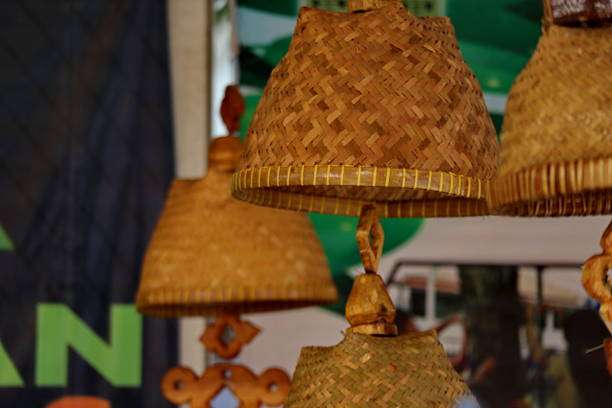
The fourth hidden cost: Changes in user behavior due to maintenance pressure.
When the maintenance cost of an object is too high, people often use behaviors to “avoid” maintenance. This avoidance will directly change the way it is used.
Lampshades are difficult to clean, so people tend to turn on the lights less often, or only when necessary. Dust easily accumulates in lamp shades , so people consciously avoid certain light angles. Over time, lighting, which should enhance quality of life, becomes something to be avoided.
This change in behavior may not be immediately noticeable, but it gradually diminishes the actual value of the lighting fixture. What you buy is no longer a complete lighting system, but a half-finished product that you limit your own use of.
Such losses are often not included in the “lamp shade cost,” but they truly exist in every compromise.
The fifth hidden cost: the continuous depletion of psychological patience.
The most expensive maintenance cost is never money, but patience.
When lamp shades get dirty repeatedly, need cleaning repeatedly, and fail to achieve the desired results repeatedly, people’s tolerance for them decreases rapidly. Even if the lamp shades themselves are not cheap, they will begin to be seen as “something not worth continuing to maintain”.
This shift in mindset is crucial. Once lamp shades go from being “items worth maintaining” to “troublemakers,” their replacement is almost inevitable.
You might tell yourself it’s aesthetic fatigue or a desire to change your style, but the real reason is often that the maintenance costs have exceeded your psychological tolerance.
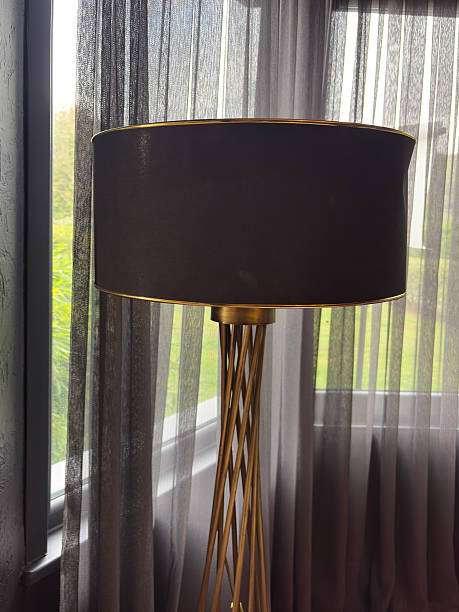
The sixth hidden cost: Premature replacement decisions
All the hidden costs will eventually lead to one result: early replacement.
lamp shades often far exceeds their actual service life. What truly determines when they become obsolete is not performance degradation, but whether you are still willing to pay the maintenance costs.
When replacement seems easier than continued maintenance, people will choose to replace. At that moment, all the previously uncalculated time, energy, and emotional investment will be abandoned all at once.
In this sense, the hidden costs of lamp shades are not paid gradually, but are realized in a concentrated manner at the end in the form of “early scrapping”.
Why are these costs almost never mentioned before the purchase?
lamp shades are ignored because they are not reflected in the parameter table. They cannot be quantified and will not be apparent in the short term.
The seller won’t tell you how many times a year you need to wash these lamp shades . The design specifications won’t warn you how much cleaning difficulty this shape will increase. And the product page certainly won’t show you what it will look like after three years, covered in dust.
Consumers often overestimate their willingness to maintain the product and underestimate the cost of long-term repetitive work.
This tacit silence between both parties systematically hides the true cost of lamp shades .
The true cost-effectiveness of lamp shades depends on whether you’re willing to maintain them long-term.
When we re-examine the value of lamp shades , the price itself becomes less important. What truly matters is whether it matches your pace of life, level of patience, and ability to maintain it.
A seemingly ordinary, easy-to-clean, and simple lamp shade might not make you consider replacing it for ten years. On the other hand, a lamp shade that is complex in design and difficult to maintain might be abandoned within two or three years.
In the long run, the latter is actually more expensive.
In conclusion: Truly mature choices are those that lighten the burden on your future self.
lamp shades are essentially a prepayment for future living expenses. The maintenance costs you overlook when you buy them will quietly come up to you every day afterward.
A truly mature choice is not about picking the most stunning design of the moment, but about choosing something that won’t feel like a burden to you years later.
Lamp shades should not be a source of consumption in our lives, but rather a background that can be ignored yet remains consistently reliable.
Only when you realize this can you truly understand the cost of lamp shades .
FAQ
Question 1: Can the hidden costs of
lamp shades be solved by frequent cleaning?
Frequent cleaning can delay the problem, but it cannot eliminate the maintenance limitations imposed by the structure and materials. The design determines the difficulty of cleaning, and actions can only compensate for it to a limited extent.
Question 2: Are more expensive lamp shades always cheaper to maintain?
Not necessarily. Price reflects design and brand more, while maintenance cost depends on structural complexity and material properties; the two are not always positively correlated.
Question 3: What factors should I consider to assess the maintenance difficulty of
lamp shades before purchasing ?
You can assess this by considering factors such as ease of disassembly, surface smoothness, presence of deep recesses, and whether frequent contact with high surfaces is required. These factors are often more important than appearance.