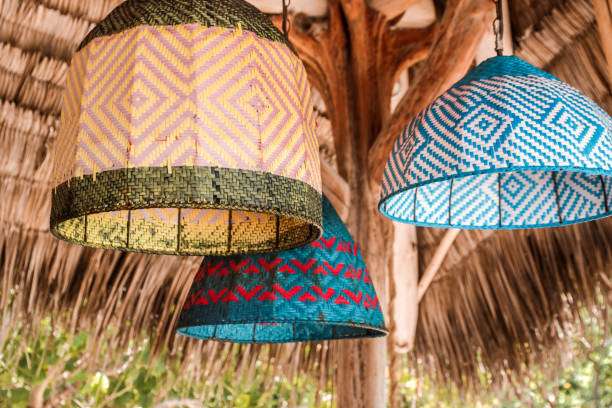
6 common reasons why lamp shades become tiresome: Why they often get boring before furniture.

You might think you’re tired of the style, but actually, the lamp shades are the first thing to “expose” the problem.
In the decline of home aesthetics, lamp shades are often the first to be disliked. The sofa is acceptable, the table is pleasing to the eye, and the floor is barely passable, but as soon as the lights are turned on, something just feels off. Many people subconsciously think that the overall style is outdated or their own aesthetic sense has changed, but few realize that what truly triggers aesthetic fatigue is often not large pieces of furniture, but lamp shades.
Lamp shades occupy a small volume in a space, yet boast extremely high visual exposure. They not only exist in the field of vision but also constantly reinforce their presence through light. Because of this high-frequency, continuous, and undeniable visual stimulation, lamp shades have become one of the easiest home furnishing elements to tire of.
Aesthetic fatigue doesn’t happen suddenly; it’s a slow, cumulative psychological process. Lamp shades, in particular, act as an amplifier in this process. This article will explore six severely underestimated points of aesthetic fatigue, explaining why lamp shades often lose their appeal earlier than furniture, and how this fatigue is actually created.
The first point of aesthetic fatigue: the “inevitability” of lampshades is far greater than that of furniture.
Furniture’s presence is intermittent. You don’t stare at a sofa for a long time, nor do you gaze at a dining table for extended periods. They only come into view when in use, otherwise receding into the background. But lamp shades are entirely different.
Lampshades become the visual focal point of a space. Light is emitted through them, naturally drawing the eye to the vicinity of the light source. This attraction doesn’t require conscious attention; it’s an instinctive response of the visual system. As a result, people unconsciously “see” lamp shades countless times every day.
It is precisely this inevitability that causes any design feature of lampshades to be constantly reinforced. Color, material, shape, proportion—any slight flaw will be magnified rapidly under frequent exposure. Lampshades that were initially considered stylish and unique can easily become the first things that cause boredom with daily use.
Furniture can adjust its aesthetic burden through frequency of use, while lamp shades cannot disappear from view, which puts them at a natural disadvantage in terms of aesthetic lifespan.
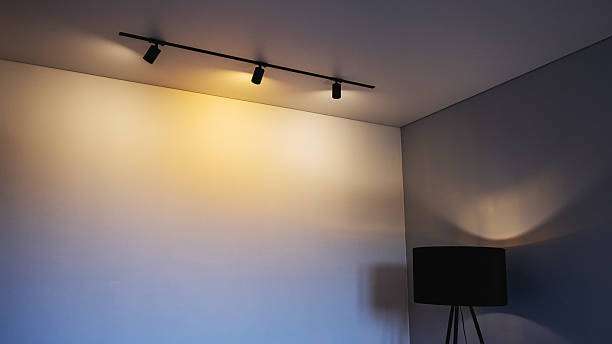
The second point of aesthetic fatigue: the stylistic expression of lamp shades is too direct.
Compared to furniture, lamp shades are more likely to carry a “strong style”. Exaggerated shapes, bright colors, and special textures are all preferred for lamp shades, as they are often seen as the finishing touch.
The problem is that a strong style means little room for error. Once other elements of the space change, or the occupants’ aesthetic preferences shift slightly, lamp shades immediately appear out of place. Furniture, due to its large size and strong functionality, can often mitigate this disharmony through rearrangement, but lamp shades are difficult to “reinterpret”.
More importantly, the style of lamp shades is constantly amplified by light. During the day, it’s just an object, but at night it becomes a highlighted and focused symbol. Any stylistic features become more pronounced under the influence of light. This prominence is an advantage initially, but in the long run, it can actually accelerate aesthetic fatigue.
When a style is constantly repeated and emphasized without variation, the brain begins to react negatively. This rejection doesn’t stem from aversion, but rather from information overload.
The third point of aesthetic fatigue: the strong connection between lampshades and emotional state.
Furniture is more often associated with behavior, while lamp shades are directly linked to emotional states. Changes in light affect people’s emotions, and lampshades act as filters of light. This means that lampshades are not only “seen” but also “felt.”
If the lighting created by lamp shades remains within a single emotional range for an extended period—for example, consistently cold, oppressive, dramatic, or overly warm—then that emotion will be unconsciously and repeatedly instilled in the individual. In the short term, people may find this atmosphere distinctive, but in the long run, the brain will crave change.
When emotional needs change and lamp shades fail to adjust accordingly, aesthetic fatigue occurs. People begin to feel that the space is “uncomfortable” or “unoriginal,” but it’s difficult to pinpoint the exact problem. Lamp shades thus become the scapegoat for this emotional imbalance, being the first to be disliked.
In contrast, furniture has a more indirect impact on emotions, as it doesn’t intervene in the emotional system through strong stimuli like light at fixed times each day. This is why lampshades are more easily perceived as “tiring to look at.”

The fourth point of aesthetic fatigue: lampshades expose material aging faster.
Aesthetic fatigue isn’t always a psychological issue; sometimes it stems from physical changes. Lamp shades are among the few home furnishings that are constantly exposed to high temperatures and strong light. This causes their materials to age much faster than that of furniture.
- Fabric lampshades are prone to discoloration.
- Plastic lampshades tend to yellow.
- Metal lampshades may show minor oxidation.
These changes may not be noticeable under normal ambient light, but they are magnified instantly when illuminated. Light emphasizes uneven color differences and minor surface imperfections, making lamp shades appear older than they actually are.
When the visual system repeatedly receives signals of “aging,” the brain automatically categorizes them as “unattractive” or “outdated.” This judgment often occurs very quickly, and a sense of weariness arises even before a clear thought is formed at the conscious level.
While signs of wear and tear on furniture can be rationalized by signs of use, the aging of lamp shades is difficult to explain as “lifelike” and is more likely to be seen as a design failure.
The fifth point of aesthetic fatigue: lamp shades lack variability, yet bear high expectations.
In most homes, lamp shades, once installed, are rarely changed or adjusted. Unlike furniture that can be moved or soft furnishings that can be changed with the seasons, they are fixed at a certain height, angle, and light level.
However, people’s expectations for lampshades are not low. They want them to be both aesthetically pleasing and timeless; distinctive yet not jarring; atmospheric yet timeless. This contradiction between high expectations and low variability makes lampshades more prone to “failure” over time.
Once lampshades fail to consistently meet these expectations, aesthetic fatigue is quickly amplified. People don’t analyze which expectations have been disappointed; instead, they simply conclude: they’re tired of this lampshade.
Furniture can have its aesthetic lifespan extended by rearranging its placement and coordinating it with soft furnishings, but once lampshades lose their appeal, there is almost no buffer.

The sixth point of aesthetic fatigue: lampshades amplify the sense of time.
Lampshades have another extremely subtle yet far-reaching characteristic: they amplify the sense of time. Because lights are often turned on at fixed times each day, lampshades become markers of the rhythm of life. Every night, when the lights come on, people see the same lamp shades.
This repetition makes lamp shades witnesses to the passage of time. Any minor dissatisfaction will accumulate in this high-frequency repetition. A design that seemed fine three months ago may start to feel redundant after six months, and may become completely unbearable after a year.
While furniture also exists for a long time, it doesn’t form such a strong connection to a specific point in time as lampshades. It is precisely this high degree of overlap with the rhythm of time that makes lamp shades an accelerator of aesthetic fatigue.
Why do we always belatedly realize we “dislike” lamp shades?
When aesthetic fatigue truly becomes apparent, people have often already endured this environment for a long time. The problem with lamp shades isn’t noisy; it just gradually wears down patience every day. When you’re feeling down or not in a good state, this accumulation finally explodes, and lamp shades become the first thing to be rejected.
This is why many people feel that a space suddenly “looks better” after changing their lamp shades. It’s not that lamp shades themselves are bad, but rather that they have long borne too much aesthetic and emotional pressure.
In conclusion: Lamp shades aren’t unsightly, they’re just too frequently seen.
Lampshades are worn out earlier than furniture isn’t because they’re unimportant, but precisely because they’re so crucial. They participate in the light, mood, rhythm, and sense of time within a space, becoming a magnified element.
Understanding these aesthetic fatigue points of lamp shades is not about denying design aesthetics, but about being more restrained in making choices. Truly pleasing lamp shades are often not the most eye-catching one, but rather the one that gradually recedes into the background over time, yet never becomes unpleasant.
FAQ
Question 1: Why do lamp shades look great when you first install them, but suddenly seem unpleasant after a while?
Because high-frequency visual exposure amplifies any design features. Once the novelty wears off, what remains is a pure test of aesthetics over time.
Question 2: Are minimalist lamp shades always less likely to cause aesthetic fatigue?
Not necessarily. Minimalism, if accompanied by a single lighting effect or material aging, can also quickly lead to fatigue.
Question 3: Can changing the light bulb alleviate the aesthetic fatigue caused by lamp shades?
It can only alleviate the problem partially. The light bulb changes the color and brightness of the light, while lamp shades determine the way the light exists; the two cannot be completely replaced.