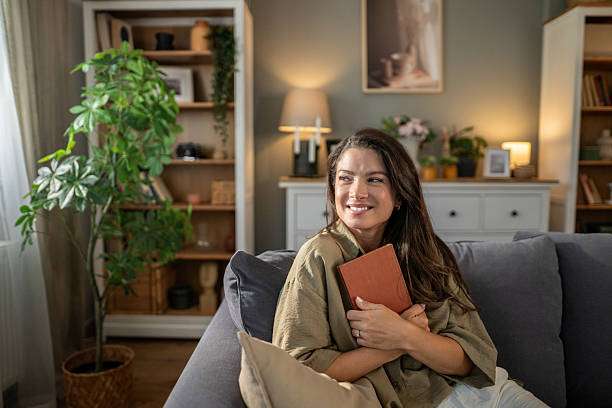
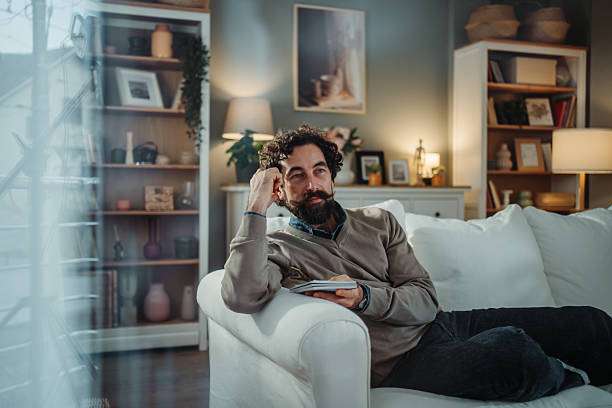
3 spatial reversals of lamp shades : In the same room, simply changing the lamp shades instantly changes its application.

Introduction: Is space really determined by area and furniture?
Many people’s understanding of space remains at a very superficial level. Whether a room is a living room or a bedroom depends on what furniture is placed there; whether a space is suitable for working depends on whether there is a table and chair; whether a room can make people relax depends on whether the decoration style is warm and inviting. Therefore, when a space is not used in a way that is convenient, people often choose to change furniture, change the layout, or redecorate, but rarely think about a lighter, faster, and more easily overlooked variable— lamp shades .
In fact, at the level of spatial perception, light often has more decisive power than furniture. And lamp shades are the key medium for light to enter a space and shape its meaning. They not only change the form of light, but also directly affect people’s judgment of the use of a space. When lamp shades change, the same room can undergo a “use reversal” at the psychological level, from a work area to a rest area, from a public space to a private space, from a functional place to an emotional place.
This is not an exaggeration, but rather stems from the deep psychological mechanisms underlying the relationship between light, space, and behavior. This article will break down three typical examples of spatial reversal to explain why simply changing lamp shades can instantly transform the function of the same room.
The first type of spatial inversion: from “execution space” to “dwelling space”
Many rooms are not designed for people to spend a lot of time in. They are unconsciously created as execution spaces, places only suitable for completing tasks, not for lingering. Studies, dining rooms, and even living rooms often fall into this category. People are quite efficient in these spaces, but they always feel like they can’t stay long, and they want to leave as soon as the task is completed.
the lamp shades in a room emphasize direct, focused, and high brightness, then the light will continuously send a signal to people: this is a place for action, completion, and problem-solving.
In such a lighting environment, the brain automatically raises its arousal level, compresses the perception of time, and keeps people efficient, but makes it difficult to relax. The purpose of the space is psychologically locked into “performing tasks.”
When lamp shades are replaced with more diffused, softer-edged types, the psychological properties of the space are immediately reversed. The light no longer hits the desktop or the center of vision directly, but is softened and spread throughout the entire space. The brightness does not decrease significantly, but the stimulating effect is significantly reduced.
This change reduces the brain’s sense of urgency, lengthens the perception of time, and makes people more willing to sit still, even lingering after tasks are completed. Spaces that were originally used only for execution begin to possess the attribute of lingering. The study is no longer just an office area, the dining room is no longer just a eating area, and the living room is no longer just a transitional area.
The lamp shades here do not achieve lighting adjustment, but rather a psychological reversal of the space’s purpose.
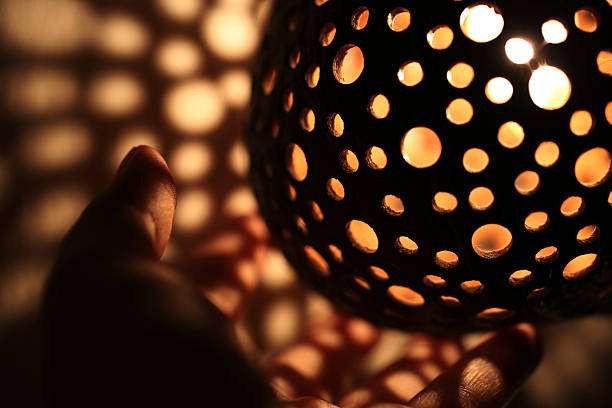
The second type of spatial reversal: from “public space” to “private space”
Many rooms, though physically private spaces, psychologically evoke the feeling of public places. Being in these spaces can easily make people feel tense, restrained, and unable to relax. The most typical examples are often bedrooms and family living rooms.
A major reason for this misalignment is that lamp shades make the light too “exposed.” When the light source is clearly visible, the direction of the light is definite, and the coverage is too large, the space is unconsciously interpreted as an open place that can be observed by others. This lighting environment conforms to the characteristics of a public space, rather than a private space.
When lamp shades are replaced with a design that creates a sense of enclosure, the psychological boundaries of the space change significantly. Light no longer diffuses outwards, but rather seems to linger within the room, surrounding the person. This light subconsciously conveys a message: this is a protected area.
In such a lighting environment, people are more likely to lower their guard and reduce their level of self-monitoring. Their posture becomes more casual, their voices naturally lower, and their emotions are more easily revealed. Spaces that were originally public quickly transform into private spaces.
This transformation doesn’t rely on partitions, curtains, or walls, but rather on altering the behavior of light through lamp shades . The physical boundaries of the space remain unchanged, but the psychological boundaries have been reversed.
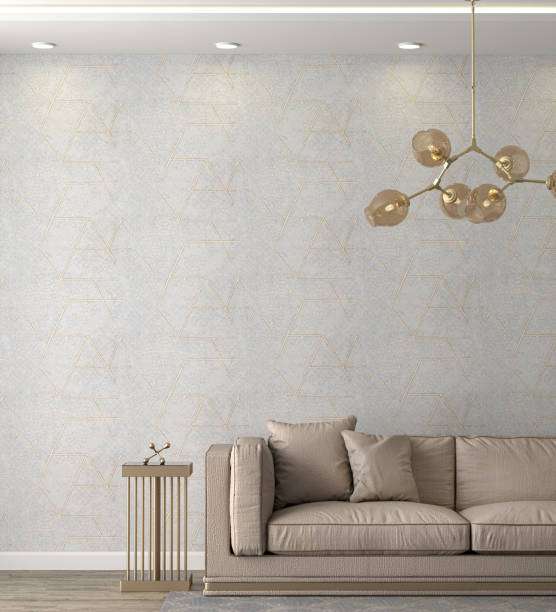
The third type of spatial reversal: from “functional space” to “emotional space”
Functional spaces emphasize clear purpose, efficiency, and goal orientation. People exist within them to accomplish a specific task. Emotional spaces, on the other hand, emphasize feelings, states, and experiences. People within them don’t necessarily have to do anything, but are naturally influenced by their environment.
Many homes, despite having ample space, fail to become true emotional spaces. People return home physically, but their emotions don’t quite follow. This is often not a problem with the furniture or decor, but rather because the space remains solely focused on functional logic.
When lamp shades are designed with efficiency in mind, the light becomes focused, precise, and highly directional. This type of light is well-suited for functional operations but not for emotional expression. Emotions require a slow, diffused, and nurturing environment.
changing the lamp shades , the light began to show gradations and layers. There were no longer obvious breaks between light and dark, but rather a natural transition. Areas of light with “no clear purpose” appeared in the space, and it was precisely these areas that became the carriers for emotions to linger.
In such a space, people are no longer urged to do anything, but are allowed to do nothing at all. A room that originally served a certain function gradually evolves into a space that carries emotions. People begin to relax, reminisce, daydream, and even feel safe and belonging here.
This reversal signifies a shift in the use of space from “serving activities” to “carrying people themselves.” And lamp shades are precisely the switch that triggers this change.
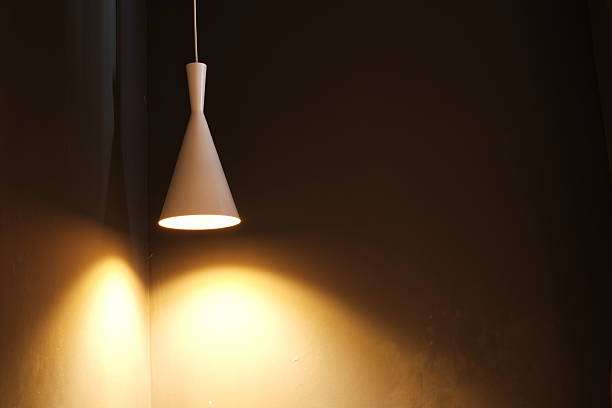
Why can simply changing the lamp shades lead to such a significant change in space utilization?
On the surface, lamp shades are just a small component that seems unlikely to bear such a significant spatial function. But from a perceptual perspective, they are precisely in the most crucial position.
Human judgments about the use of space are not made through rational analysis, but rather through a series of rapid, unconscious perceptual responses. Light is the highest priority signal among these, and lamp shades directly determine how light exists.
When lamp shades change, the language of light changes accordingly. The space doesn’t “truly” change its function, but the human psychological system has already formed a new interpretation. Once this interpretation is established, behavior and emotions will automatically follow.
In conclusion: What truly determines the use of a space is often not the space itself.
Looking back at these three types of space inversion, a common pattern emerges. Spatial usage is not a fixed property, but rather a result dynamically generated by environmental signals. Lamp shades are a severely underestimated component of this signal system.
When lamp shades treat light in different ways, the same room can be freely switched between performance, relaxation, privacy, and mood. This switching requires no construction, no disruption of the original layout, only an understanding of how light affects people’s feelings.
Perhaps the next time you feel a room is “not working well,” don’t rush to dismiss the space itself. It’s very likely that it just hasn’t found the right lamp shades yet .
FAQ
Question 1: Can changing only the lamp shades , without changing the bulbs, really change the use of a space?
In most cases, yes. Lamp shades determine how light enters the space, and their impact on psychological perception is often greater than that of bulb parameters.
Question 2: Are all rooms suitable for changing their purpose using lamp shades ?
Yes, but only if the lamp shades match the intended use of the space. Different uses require different lighting characteristics.
Question 3: Is this spatial reversal a temporary psychological illusion?
No. As long as the light environment persists, people’s behavior and emotional patterns will be affected in the long term.