5 presence thresholds for lamp shades: Excessive presence can actually ruin the space

The problem actually started when lamp shades began to be “noticed.”
In a truly sophisticated and comfortable space, there’s a very subtle yet real phenomenon: you’re almost unaware of the presence of lamp shades . The lights are on, the light is natural, and the space is complete, but the lamp shades themselves don’t frequently intrude into your consciousness. Once you start repeatedly noticing the lamp shades , and begin to feel that they’re “too conspicuous,” “too attention-grabbing,” or “too noticeable,” the spatial experience has often already been quietly ruined.
Lamp shades aren’t necessarily better the more elaborate their design; their presence must be strictly controlled within a certain threshold. Once this threshold is crossed, they shift from serving the space to dominating it. The problem is that many people don’t know where this threshold is, let alone how lamp shades gradually exceed it.
This article doesn’t discuss whether lamp shades are aesthetically pleasing but rather delves into how “perceived” lamp shades should be in a space. When their presence is too strong, they can subtly disrupt spatial order, emotional stability, and overall harmony. The following five presence thresholds are the key points where lampshades are most likely to overstep their boundaries yet are least noticed.
The first existence threshold: the visual focus is occupied by lamp shades for a long time.
The visual focal point in a space should ideally be fluid. A person’s gaze should naturally wander among furniture, circulation paths, window views, and the interplay between people and objects; this fluidity itself is a significant source of comfort. However, when lamp shades are too prominent, they forcibly occupy the position of the visual focal point and become almost impossible to ignore when the lights are on.
This is because light-emitting objects naturally have visual priority. No matter how small the lamp shades are, as long as they are emitting light, they will be processed by the brain first. When the shape, color, or material of the lamp shades is also eye-catching enough, this priority is amplified infinitely.
The problem isn’t that the lamp shades are seen, but that they are “constantly seen.” Every time a person enters a space, looks up, or turns around, their gaze is drawn back to the same point by the lamp shades , causing the sense of spatial depth to begin to collapse. Over time, this creates an inexplicable feeling of fatigue, as if the space has shrunk and flattened.
This is precisely the first sign that the threshold for existence has been crossed. Lamp shades have transformed from a functional presence into an object constantly vying for attention. When they no longer allow free flow of vision, the space has already begun to be disrupted.

The second threshold is that lamp shades begin to dominate the spatial style rather than echo the space.
In a healthy spatial relationship, lamp shades should be responders to style, not definers. They can reinforce existing styles, but should not unilaterally declare the existence of a style. However, when lamp shades are too prominent, they often overshadow the style and become the absolute protagonist of the space.
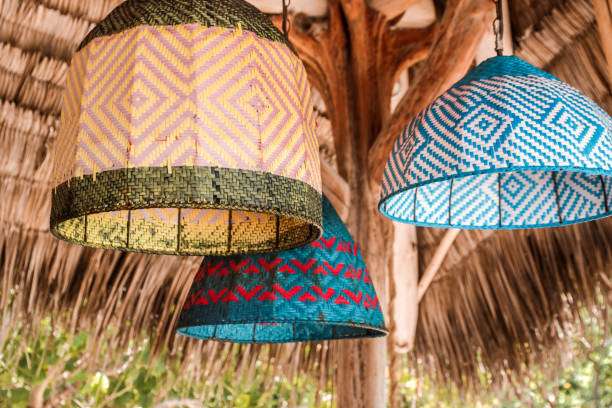
lamp shades that have extreme shapes and distinct stylistic symbols . Initially, people may feel that the space is “very well-designed,” but this sense of design is often one-sided. Other elements are either forced to conform to the lampshades or appear out of place.
As time goes on, this imbalance will gradually become apparent. The presence of furniture is diminished, walls and soft furnishings begin to become mere backdrops, and the richness of the space is compressed into a singular expression. Although people may not be able to pinpoint exactly what’s wrong, they will vaguely sense that the space lacks a sense of breath.
When lampshades become the absolute center of style, the second threshold of existence has been crossed. The space is no longer a collaborative whole of multiple elements, but a stage unfolding around the lampshades. This sense of stage can easily lead to oppression and aesthetic fatigue in long-term living.
The third existence threshold: the presence of light is masked by the “image” of lamp shades.
lamp shades should be to regulate light, not to showcase themselves. However, when their presence is too strong, lampshades make people see “them” first, rather than “the light.” Once this order is reversed, the spatial experience changes fundamentally.
When people enter a space, if their first reaction is “These lamp shades are so unique” rather than “This space is so comfortable,” it means that lamp shades have overstepped their proper place. Light is no longer the main element in creating atmosphere, but has become a tool for displaying the form of lampshades.
In such situations, even if the light itself isn’t glaring, it can still feel unnatural. This is because the human perceptual system isn’t designed to appreciate light fixtures, but rather to gain a sense of security and direction within a light environment. When lampshades become too intense, the light loses its “invisible support” and becomes performative.
This is a very subtle yet extremely destructive threshold. Once breached, the space gradually loses its sense of relaxation and becomes more like a deliberately arranged exhibition space than a habitable environment.
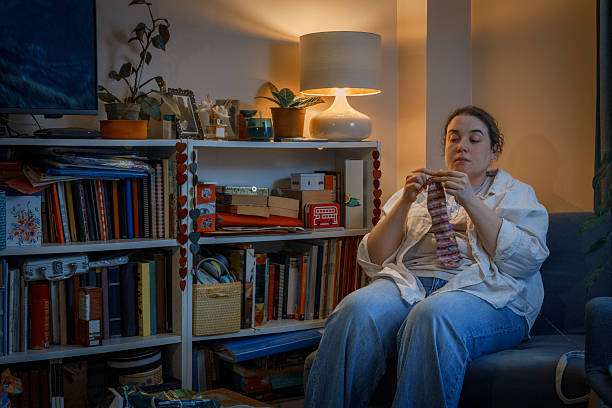
The fourth existence threshold: lamp shades influence human behavior.
Overly prominent lamp shades are not just “uncomfortable to look at,” but can also begin to affect people’s behavior. When lampshades are too conspicuous in a space, people will unconsciously adjust their movement paths, where they linger, and how they engage in activities.
For example, people might avoid sitting directly under lamp shades or deliberately avoid a certain area while walking. Some people may also unconsciously look up at the lamp shades frequently , creating a slight distraction. These behavioral changes are usually very subtle, but they can accumulate over time into a feeling that “this space doesn’t feel right.”
When lamp shades begin to interfere with natural human behavior, it indicates that their presence has transcended the decorative level and entered the realm of spatial domination. Space should adapt to people, not the other way around . Once this role is reversed, the fourth threshold of existence has been breached.
The fifth threshold: lamp shades become an emotional burden rather than an emotional support.
The most serious, and also the most difficult to detect, is the fifth threshold of presence. When the presence of lampshades becomes too strong, it gradually transforms from an emotional supporter into an emotional burden.
Light is meant to help people relax, focus, or transition, but when lampshades continuously deliver strong visual signals, the brain is forced to constantly process this information. This continuous low-intensity stimulation slowly depletes emotional tolerance.
People might feel inexplicably irritable at the end of the day, or be unable to stay in a certain space for long without being able to explain why. Lamp shades haven’t “made a mistake” here; they’ve just been too overpowering.
When a lamp shade needs to be “tolerated” rather than “ignored,” it has already crossed the final threshold of existence. The emotional balance of the space will quietly crumble under this long-term burden.

Why are overly prominent lamp shades so easily misjudged as “high-end”?
In the context of consumerism, a strong presence is often mistaken for a strong sense of design. Exaggeration, eye-catching design, and uniqueness tend to gain acceptance more quickly. However, this acceptance stems more from display and comparison than from long-term interaction.
lamp shades is that they are not objects to be seen occasionally, but rather something that repeatedly enters the perceptual system every day. Designs that look stunning in photographs or exhibition halls may not be suitable as long-term background elements.
When the threshold of one’s sense of presence is ignored, space is constantly consumed, and people often only realize the source of the problem much later.
In conclusion: The best lamp shades are the ones you can hardly remember what they look like.
In a truly mature space, lampshades should be present in a low-key and stable manner. They don’t need to be praised or discussed; they only need to appear when they should appear and disappear when they should disappear.
shade’s presence isn’t about being as subtle as possible; it’s about striking the right balance. Once it crosses that delicate threshold, lamp shades can go from being a plus to a hidden disruptor.
When you start to repeatedly realize the existence of lamp shades , you might as well stop and think about it. Perhaps it’s not that your aesthetic sense has changed, but that it’s become too prominent.
FAQ
Question 1: Are high-profile lamp shades always bad?
Not necessarily. They may work in exhibition spaces or short-term use environments, but they pose a very high risk in long-term living spaces.
Question 2: How do you determine if lampshades have exceeded the existence threshold?
When you start to pay close attention to them, avoid them, or have an emotional reaction to them, they have often already crossed the line.
Question 3: Will changing the light bulb reduce the presence of lamp shades ?
It can only partially alleviate it. Presence is determined more by shape, proportion, and how light is presented, rather than simply brightness.