4 common consumer mistakes when buying lamp shades : Most people make the wrong choice from the very first step.

The Underestimated Starting Point for Decision Making: Why the “First Impression” of Lamp Shades is Almost Inevitably Wrong
Among all home-related purchases, lamp shades are perhaps one of the easiest categories to be “intuitively driven.” Most people make decisions about lamp shades extremely quickly, even with a sense of nonchalance. They glance at the shape, scan the fabric, imagine what it would look like on the lamp, and then complete the purchase. This process seems natural because people generally believe that lamp shades are merely accessories to lighting fixtures and will not substantially affect the user experience.
This seemingly reasonable understanding constitutes the most hidden and common trap in lamp shade consumption. Most people don’t make mistakes in the details but rather start from the wrong premise. Once the starting point is wrong, even the most rational and cautious comparisons afterward are merely optimizations within the flawed framework, naturally leading to unsatisfactory results.
Lamp shades are not merely decorative choices, but functional components highly dependent on the usage scenario, lighting requirements, and spatial behavior. Ignoring this premise almost guarantees ongoing discomfort during later use, yet the cause remains difficult to pinpoint. The following four consumer misconceptions are the core reasons for “choosing the wrong thing from the very first step.”
The first misconception: treating lamp shades as decorations rather than optical structures.
This is the most common, and also the most fatal, misconception. When choosing lamp shades , the vast majority of consumers first focus on whether the style matches the decor, whether the color coordinates with the furniture, and whether the shape is “attractive.” This aesthetic-first selection logic may hold true in other soft furnishing categories, but it is extremely dangerous when it comes to lampshades.
lamp shades is not to be “seen,” but to “manage light.” They are the intermediary between the light source and space, and the key structure for filtering, reflecting, diffusing, and directing light. Once consumers perceive lampshades as purely decorative from the outset, they are essentially relinquishing their psychological right to judge the quality of light.
The consequences of this misconception are often not immediately apparent. After the lights are installed, the space may still appear bright, and the style may seem appropriate. However, as time goes on, people will gradually notice some subtle discomforts. For example, during nighttime activities, the lighting may feel uneven; eyes may tire easily when reading or dining; and certain corners of the space may always appear blurry. These problems are rarely directly attributed to lampshades because, in our perception, lampshades are merely the “outer shell.”
In fact, from a professional perspective, if lamp shades have an unreasonable optical structure, no matter how exquisite their appearance, it’s a failed purchase. Treating lamp shades as mere decorations is the root cause of why many consumers have already strayed from the right path from the very first step.
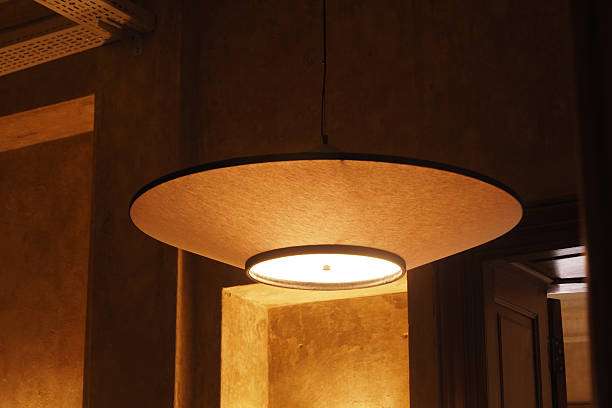
The second misconception: focusing only on brightness while ignoring how light “falls” into the room.
in lamp shader consumption is using “brightness” as the sole criterion. Many people subconsciously ask “Is it bright enough?” after installation, and if the answer is yes, they consider the selection successful.
The problem with this approach is that it completely ignores the quality of light distribution. Brightness is merely a result, while lamp shades truly determine how light enters space—whether it is concentrated, diffused, reflected, or unevenly segmented.
Inappropriate lamp shades often create a lighting environment that is “bright on the surface but difficult to use in practice.” The center of the space is well-lit, but the periphery quickly falls into shadow, requiring constant visual adjustments as a person moves within it. Especially at night, this frequent switching between light and dark significantly reduces judgment efficiency and increases the uncertainty of actions.
Consumers easily fall into this misconception because it’s difficult to visually perceive differences in light distribution during the purchase process. Lamp shades displayed in stores or online are usually presented in idealized environments, lacking reference to real-world spatial scale and usage scenarios. As a result, consumers assume from the outset that “brightness equals usability,” thus overlooking the true core value of lamp shades .
The third misconception: Ignoring usage time and mistaking short-term impressions for long-term experiences.
Lamp shades are a typical “time-dependent product.” They often don’t reveal obvious problems on the first day, week, or even month after installation. The real differences often emerge with long-term use.
However, most consumers make their purchasing decisions almost entirely based on fleeting impressions. They look at a few pictures, imagine how it would look in their home, or even just glance at the lights on in a showroom, and consider that enough. This instantaneous judgment masks the most crucial aspect of lamp shades : long-term visual strain.
Some lamp shades may appear stylish and have attractive lighting effects in the short term, but prolonged exposure to such lighting environments can cause a subtle sense of fatigue. This fatigue is not as obvious as glare or discomfort, but rather an indescribable mental drain that makes one unconsciously want to leave the space.
Consumers often overlook this point because purchasing decisions typically occur during the day or in situations where actual usage is not yet fully realized. The real peak usage times, however, are at night, when fatigued, or when relaxation or focus is needed. If the initial assessment doesn’t consider long-term usage experience, subsequent regrets often come at a high cost.
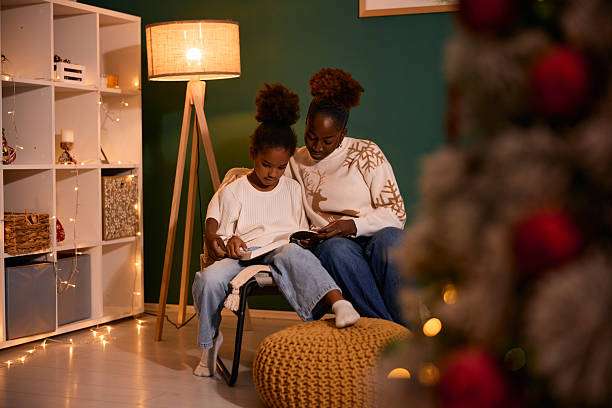
The fourth misconception: Using general standards to select lamp shades while ignoring specific spatial behavior.
The last, and most insidious, misconception is using vague, general standards to select lamp shades without considering the specific behavioral patterns in the space. Many people think that since it’s living room lamp shades , bedroom lamp shades , and dining room lamp shades , as long as the category is correct, the selection won’t be a big problem.
However, in reality, different families and different spaces, even those with the same function, may use them in completely different ways. Some living rooms are mainly for watching movies, while others are mainly for communication; some bedrooms emphasize reading, while others emphasize sleep transition; some dining rooms are for quick meals, while others are for long gatherings. These differences will directly affect how lamp shades should handle light.
When consumers adopt a “generic solution” from the very beginning, they are essentially abandoning respect for their own usage habits. Lamp shades thus fail to truly serve the space, merely completing the installation in form. This choice may seem harmless initially, but as usage deepens, the relationship between the space and the person gradually becomes strained.
truly mature decision about lamp shades should begin with “What will I do in this space?” rather than “What type of room is this lamp shade suitable for?” Ignoring this often means choosing the wrong direction from the start.
Why are errors in lamp shade consumption so difficult to detect in a timely manner?
Unlike other home furnishing products, lamp shades rarely present problems in the form of “malfunctions.” They don’t break suddenly, nor do they immediately affect basic functionality. The issues are more about the user experience, and people are extremely tolerant of these sensations.
This is why many lamp shade consumption errors are overlooked for a long time, only becoming apparent when the environment is changed, the experience is compared, or the issue is amplified in a specific context. This delayed feedback mechanism makes lamp shades a consumer product category that is extremely prone to misjudgment.
Once you understand this, you’ll realize that the most important thing in consuming lamp shades is not “looking at more models,” but rather starting from the right logic for judgment.

Conclusion: Before selecting lamp shades , correct the first step.
lamp shades may seem simple, but they cover almost all of the actual decision-making processes of most people. They are not due to a lack of rationality on the part of consumers, but rather because lamp shades have long been misunderstood as “unimportant.”
If the initial judgment is flawed, all subsequent choices will unknowingly lead in the wrong direction. Only by re-understanding the role of lamp shades and considering their behavior in light, time, and space can consumer decisions truly approach the correctness.
Lamp shades aren’t products you’ll immediately regret buying the wrong one, but they’re often products whose problems become more apparent the longer you use them. The key to avoiding all of this is precisely to stop making those seemingly obvious mistakes from the very first step.
FAQ
lamp shade selection so seriously ?
Yes. Because lamp shades directly affect the long-term user experience, not just the short-term visual effect. The more frequently a space is used daily, the more carefully it deserves to be considered.
Question 2: I’ve already bought the wrong lamp shades , is there any way to fix it?
To some extent, you can alleviate the problem by changing the light source or adjusting the lamp position, but if the optical logic of the lamp shades themselves is flawed, the most effective way is still to replace them.
Question 3: How to avoid choosing the wrong lamp shades in the first step ?
Before looking at the appearance, clarify the purpose of the space and the usage behavior, and then think about how the light should be distributed. This way you can avoid being misled by appearances.