Lamp Shades features 5 revolutionary upgrades to reduce glare: creating truly “bright but not dazzling” comfortable light.

In today’s ever-evolving lighting design landscape, people’s needs for light have shifted from simply “being able to see” to “seeing more comfortably.” Lighting is no longer just a function, but an experience, an emotional bridge between residents and their space. However, in many homes, problems such as excessive brightness, glare, noticeable light spots, and the inability to look directly at light sources persist, affecting visual health and reducing spatial comfort. With advancements in lighting technology, lamp shades have undergone a revolutionary upgrade in the field of anti-glare.
They are no longer just light-blocking accessories, but have become essential tools for softening light, adjusting the light field structure, and stabilizing illuminance distribution. Through material innovation, structural improvements, and optimized light control methods, “bright but not glaring” light has truly become a possibility.
As lamp shades have evolved from traditional light-shielding shells to light-controlling devices that actively participate in optical design, luminaires are no longer simply viewed as interior decorations, but have become optical systems with scientific logic.
Especially with the trend of home lighting increasingly aligning with hotel-level comfort experiences, anti-glare upgrades have become particularly crucial. This article analyzes the innovations in the field of anti-glare from five key aspects, helping readers understand how to truly create soft, uniform, stable, and comfortable light that is visible yet not dazzling, from structure, materials, light control to environmental adaptation.
Lamp shades achieve a significant leap in anti-glare performance through deep cavity structure optimization.
When users find the light glaring, the most direct cause is often that the light source of the lamp is too far outward, exposing the light source within the user’s line of sight. Firstly, by deepening the structure of the lamp housing , the light source is made to retract inward, thus reducing the probability of direct light entering the field of vision.
The deep cavity lamp housing utilizes the height difference between the inside and outside of the lamp to allow the light to diffuse once inside the housing before being released outward, making its edges softer and preventing the formation of glaring light spots.
The deep cavity design of lamp shades not only decisively blocks the visibility of the bulb, but also allows light to undergo secondary reflection inside, resulting in a more uniform light field. In spaces such as living rooms and bedrooms where people need to look directly at the light fixture for extended periods, this structure significantly improves visual comfort, softening the light without making it dim.
Many high-end lighting brands favor deep cavity structures because they allow lamp shades to retain brightness while suppressing glare, achieving a balance between luminous efficacy and comfort.
When lamps are installed overhead, the deep cavity structure prevents direct eye contact with the light source when sitting or lying down, thus allowing lamp shades to provide stronger protection. As home design increasingly prioritizes eye comfort, deep cavity shades are becoming a design trend, driving the first step in upgrading anti-glare technology.
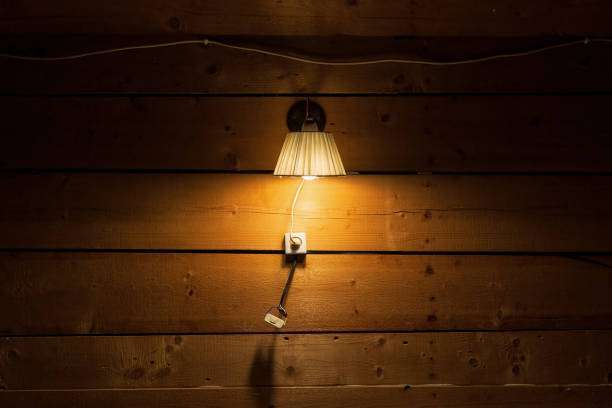
The inner wall coating technology is the second key innovation in lamp shades’ anti-glare technology.
Modern lamp shades no longer rely on simple materials to block light; instead, they control the direction of light diffusion through internal coatings. The internal walls utilize microreflective coatings, diffuser coatings, matte coatings, or specialized optical particle coatings to allow light to be diffused more stably and evenly, avoiding the sharpness of direct light. Many lamp shades use high-reflectivity or diffuse coatings internally, distributing light gently within the shade, increasing its overall light efficiency while reducing glaring, directional light.
If the inner wall of a light fixture is made of pure glass or pure metal, the light will be overly concentrated, making the light emitted by lamp shades sharper. Adding a coating, however, allows the light to diffuse more gently. For this reason, many families with higher eye health requirements, such as those with elderly members, children, or residents who spend long hours in the space, prefer light fixtures with anti-glare coatings.
This allows light to enter the indoor environment in a healthier and softer way, rather than simply passing through.
The coating also improves the problem of bright spots on lamps, preventing the formation of high-brightness areas on the lamp shade surface and resulting in a more uniform light distribution across the entire lamp shade. Whether it’s a reading nook, a bedside lamp in the bedroom, or a lamp above the dining table, the upgraded inner coating provides a more stable visual experience and is more suitable for long-term use.
Material upgrades enable lamp shades to achieve a third breakthrough in light softening capabilities.
Material is one of the most crucial factors in light adjustment for lamp shades. Modern anti-glare shades increasingly utilize materials with light-diffusing capabilities, such as frosted glass, acrylic diffusers, milky white glass, and lightly matte resin. These materials allow light to be refracted evenly as it passes through, thereby reducing the sharpness of the light source and enhancing the overall softness of the light.
Frosted glass with lamp shades is the most classic choice, as it disperses light into countless tiny beams upon contact with the surface, thus naturally softening it. Milky white glass increases light scattering density, making the light effect more even, ideal for bedrooms or living rooms where a calming atmosphere is needed. Acrylic diffusers also achieve a soft light effect and are lighter and less prone to breakage, making them suitable for children’s rooms or large spaces.
The more light-scattering a material is, the stronger its anti-glare capability. If the cover material is too transparent, light will pass through directly, making the light source too visible. Therefore, transparent glass covers are more suitable for use with deep cavity structures. Frosted, matte, and milky white materials can balance light themselves, achieving a soft light effect without the need for complex structures.
The role of materials in anti-glare technology goes beyond simply reducing glare; they also determine how light propagates within a space, thus influencing the overall spatial hierarchy and emotional impact. As materials become more sophisticated, their role is shifting from aesthetic design to optical control design, truly becoming dimming tools.
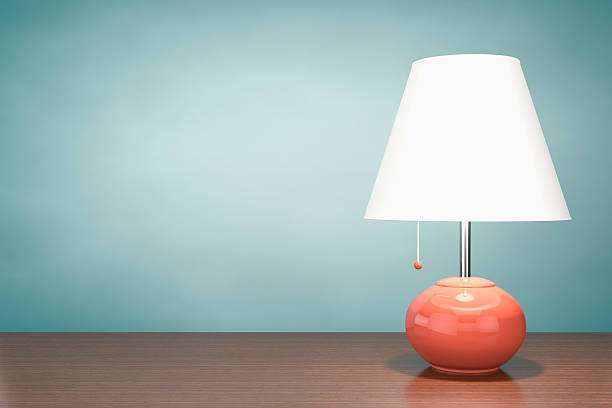
The evolution of light source hiding methods has become the fourth key upgrade of lamp shades.
The anti-glare capability of modern lamp shades is closely related to their light source arrangement. Traditional lamp shades often directly cover the bulb, placing the light source high and making it easily visible. Nowadays, many lamp shades use recessed light sources, shielded light chambers, angled inner walls, and double-layered shade structures to make the light primarily indirect, allowing the fixtures to be viewed more directly.
Recessed light sources are one of the most commonly used methods today. They place the bulb deeper inside the enclosure , making the light source invisible from a normal viewing angle. A double-layer enclosure structure, through the combination of an inner diffuser and an outer aesthetic cover, diffuses the light twice before it enters the room, significantly reducing glare.
An angled inner wall design, by adding a zigzag structure to the inside of the enclosure , allows the light to be reflected along a more complex path, making it even softer.
Concealed light sources not only enhance visual comfort but also improve the aesthetics of lighting fixtures, resulting in a cleaner, more streamlined appearance unaffected by the bulb’s shape. In high-end hotel lighting, upscale residential design, and modern minimalist home décor, concealed light sources paired with high-quality shades have become a mainstream choice. Users can look directly at the light fixtures freely in bright conditions without any glare or discomfort.
As LED light sources become increasingly miniaturized and modular, lamp shades are able to be designed with more ingenious ways to conceal the light source, making the light appear to diffuse naturally without being glaring. This design allows the lamp to become the quietest yet most important element in the space, truly achieving “bright but not dazzling”.
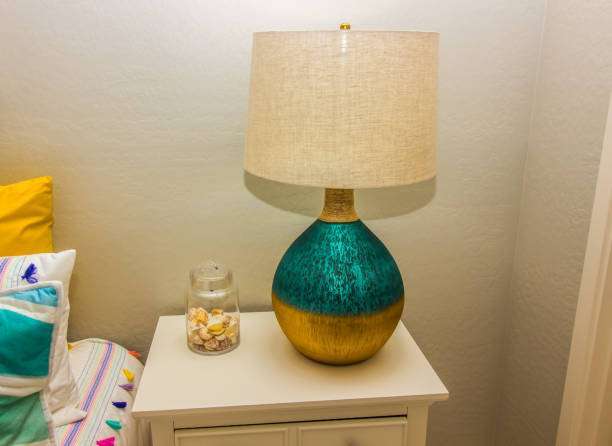
Ambient light adaptability becomes the fifth comprehensive innovation of lamp shades anti-glare.
Anti-glare is not only a property of the lamp shade itself, but also a result of the lamp shade adapting to the space. Modern lighting design emphasizes the matching of light with the scene, not only softening the light, but also exhibiting stable lighting effects in different environments. By changing the light transmittance, material density, color depth, and surface texture of the lamp shade, lamp shades can maintain a comfortable lighting performance in daylight, at night, with different furniture styles, and with different wall materials.
For example, in spaces with highly reflective, bright white walls, light can easily be reflected too brightly. Darker, softer materials should be chosen to reduce secondary light reflection. Conversely, in spaces with wood-colored walls or dark interiors, higher light transmittance is needed to ensure brightness. When the surface of the light diffuser has a fine texture, the refraction effect is more uniform, maintaining stable anti-glare performance in various scenarios.
The stronger the environmental adaptability, the longer the anti-glare performance of lamp shades lasts, eliminating the need for frequent adjustments to the lamp positions and naturally maintaining a comfortable spatial atmosphere. Whether in a large living room, a dining area with multiple lamp combinations, or a reading corner requiring precise lighting, they can maintain the softness of light amidst environmental changes, keeping the eyes healthy.
Conclusion
As lighting design has moved beyond simple brightness competition to an era focused on light quality, lamp shades have become one of the most critical optical components affecting home comfort. Whether it’s deep cavity structures, inner wall coatings, soft-light materials, concealed light sources, or environmental adaptability, each innovation makes the light softer, more stable, and more natural, allowing residents to unconsciously experience the warmth and quality of the light.
When lamp shades are involved in optical design, they are no longer just accessories to lighting fixtures, but an important foundation for building a healthy lighting experience. True comfortable light does not rely on sacrificing brightness, but on the precise coordination between the shade and the light source, making the space bright and visible, yet not glaring or tiring.