3 key structural safety aspects of lamp shades : heat resistance, flame retardancy, and stability cannot be ignored.

In the ever-evolving contemporary aesthetic environment of home lighting design, lamp shades are no longer merely light-blocking accessories, but have become crucial core components determining the texture of a space, light distribution, safety levels, and long-term user experience.
As people’s standards for nighttime light comfort, ambiance, and home safety increase, the structural safety design of lamp shades has become a focus for major brands and designers. However, many consumers often only pay attention to the shape and color when choosing lamps, neglecting the complex and critical structural engineering behind them. The safety of a lamp shade depends on materials, heat resistance, flame retardant standards, structural connection methods, heat dissipation design, and overall stability.
These factors interact and ultimately determine whether it can operate safely in the long term. In modern home life, lamp shades bear the dual tasks of adjusting brightness, softening light, and protecting LED chips and electrical components; these three key structural safety points are the foundation of their performance.
I. Structural Design Logic for Heat Resistance: A Safety System from Materials to Temperature Management
modern lamp shades not only affects their lifespan but also directly determines home safety. Different bulbs have vastly different heat outputs; for example, halogen lamps can generate temperatures exceeding 200°C, and traditional incandescent bulbs can easily experience a rapid rise in surface temperature.
While LED lights have relatively lower temperatures, the driver and core light source still experience continuous heat accumulation. Therefore, enabling lamp shades to withstand heat for extended periods without deformation, scorching, or even an increase in their ignition point is one of the most fundamental and often misunderstood technical aspects of lighting engineering. Material selection must first undergo an assessment of its heat resistance limits, including different systems such as high-temperature resistant plastics, glass, metals, ceramics, and composite materials. The thermal conductivity, ignition point, melting point, and degradation mechanism of each material will ultimately affect whether the lamp shade can serve as a reliable protective layer for the light source.
Glass is widely used in medium- and high-temperature light source environments due to its stable heat resistance, but it is heavy and its structural design must be matched with a more stable bracket; metal has strong heat dissipation, but it is easy to make the surface temperature too high, which tests the safety of users touching it; plastic is lightweight and highly malleable, but if the heat resistance is not high enough, it may become brittle and discolored after long-term use; ceramics, on the other hand, have become the preferred material for high-power lamps due to their natural heat resistance.
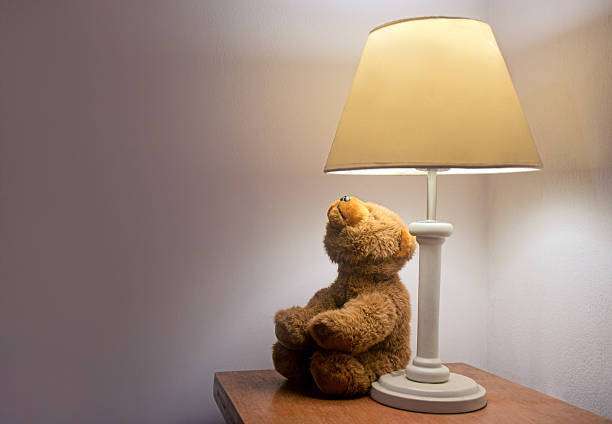
However, materials are only the first layer; the heat-resistant structure must also consider the heat diffusion path. For example, the gap between lamp shades and lamp holders should not be too small, otherwise heat accumulation over a long period of time will lead to material fatigue. Whether the inner wall needs heat dissipation grooves, whether the outer surface is coated with a thermally conductive coating, and whether the opening angle promotes air convection—these structural details directly determine whether a stable temperature can be maintained during continuous lighting.
Furthermore, lamp shades are not isolated components of a lighting system; they must form a thermal equilibrium system together with the lamp body, lamp post, wiring, and driver module. The smoothness of this structure is also a crucial factor affecting heat resistance. Many inexpensive lighting fixtures neglect heat circulation, resulting in lamp shades that resemble miniature ovens, rendering their heat-resistant design ineffective.
Truly skilled engineers will systematically construct a heat-resistant and safe structure from multiple perspectives, including the light source temperature profile, material heat resistance thresholds, heat dissipation paths, and airflow trends, ensuring not only aesthetics but also genuine safety.
II. The Importance of Flame Retardant Standards for Lamp Shades : Even Minor Negligence Can Lead to Hidden Risks of Disasters
When people talk about lamp shades , they often hear terms like material, style, light transmittance, color temperature matching, and design expression, but very few people actively inquire about flame retardancy ratings. The importance of flame retardancy is often only mentioned in fire incidents, but in reality, as the first layer of contact with the light source, its flame retardancy directly affects home safety. If the material softens when heated, drips, or is even ignited by sparks from an electrical fault, it can become a source of flame propagation.
Many household light fixtures, although low in wattage, are exposed to heat radiation for extended periods. If the surface material does not meet basic flame retardancy standards, it can easily lose its protective capabilities in the event of accidental electric arcs, high temperature buildup, or bulb explosion.
Flame retardant design is never as simple as making materials “non-combustible.” It is a systematic project that includes the chemical stability of the material itself, the method of raising the ignition point, carbonization characteristics, distribution of flame retardant additives, thickness design, and the reaction mode of the overall lamp shades under different temperature conditions. The flame retardant design of lamp shades mainly needs to achieve three major goals: non-self-ignition, non-combustion-supporting, and non-dripping. These three standards involve complex experimental verification, such as glow wire resistance tests, horizontal and vertical burning tests, and flame retardant rating classification.
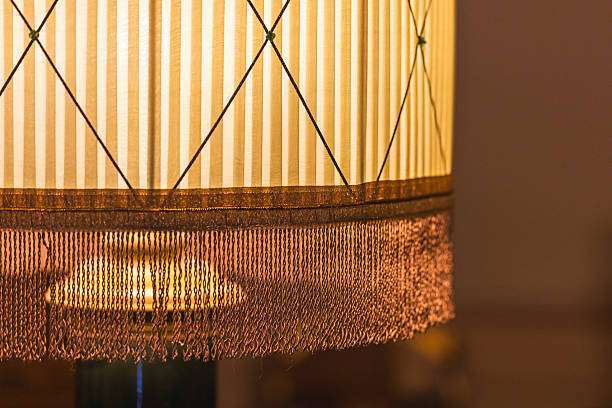
High-quality lighting fixtures typically employ fluorocarbon flame retardants, metal oxides, ceramic powders, and halogen-free flame-retardant polymers to enhance fire resistance. Among these, halogen-free flame-retardant systems are particularly favored due to rising environmental standards.
Flame-retardant lamp shades should form a carbon layer to isolate oxygen when exposed to a flame source, rather than dripping liquids that could promote combustion. However, more flame-retardant additives are not necessarily better; excessive chemical additives can affect light transmittance, color stability, mechanical strength, and even the rate of material aging after long-term use. Therefore, a flame-retardant structure is not a simple formulation but rather requires achieving an optimal balance between the flame-retardant system and the optical, mechanical, and weather-resistant properties of the lamp shades .
More importantly, flame retardancy must be considered in conjunction with the overall circuit stability of the lighting fixture. If there is a risk of short circuit, high-voltage breakdown, or old wiring within the circuit, even with good flame retardancy, extreme reactions may occur under strong electric arcs.
Therefore, it becomes a second important layer of protection, establishing a safe buffer between the light source and the environment. Improving flame retardancy is not only an engineering requirement but also an essential underlying principle for modern home safety.
III. Structural Analysis of Lamp Shade Stability: Connection Methods, Stress Structure, and Key Aspects of Long-Term Durability
The third key structural safety point for lamp shades is stability, which is just as important as heat resistance and flame retardancy, yet is more easily overlooked by users. Many lamp accidents do not originate from high temperatures or fires, but from detachment, loose brackets, or fatigue in the connecting structure, leading to falls, breakage, and even injury to family members. As external components, lamp shades often face vibration, gravity, external forces during cleaning, collisions during transportation, and the aging of materials over the years, all of which test structural stability.
The connection methods between lamp shades and the lamp body mainly include threaded connections, snap-fit structures, metal bracket fixation, and magnetic and pin combinations, and each method must consider the deformation caused by thermal expansion and contraction of materials. In high-temperature environments, plastics may experience slight expansion, and if the clips are too tight, they may crack; metal, due to its weight, requires brackets made of higher-strength alloys or steel to prevent prolonged sagging; although glass is highly heat-resistant, it is brittle under impact, so its structure must ensure uniform stress distribution and avoid localized stress concentration.
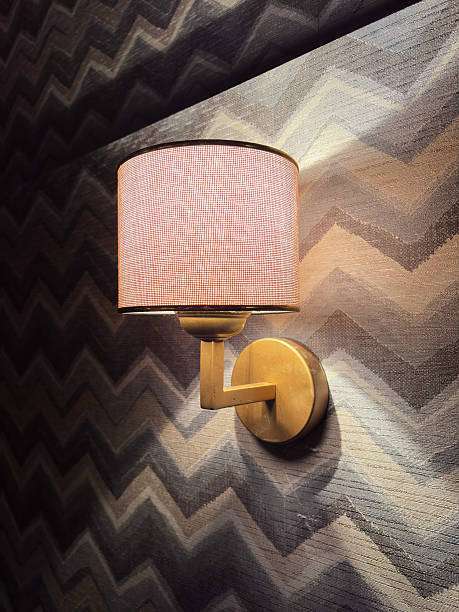
Another key aspect of stability lies in the design of the center of gravity. Excessive weight and a shifted center of gravity can create irregular stress on the suspension structure, leading to tilting or even detachment after prolonged use. Excellent lamp shade design uses calculations of thickness distribution, material density, and support positions to ensure the center of gravity falls within an ideal area, maintaining consistent orientation during use. Stability also affects light performance. Even slight displacement can alter the angle of light, impacting indoor lighting effects. This is especially critical in devices used for reading lights, work lights, or display lights, where lamp shade stability is paramount for light accuracy.
Furthermore, stability also includes long-term durability. Over many years of use, factors such as ultraviolet radiation, temperature changes, humidity variations, and air pollution particles can cause changes in the material’s structure. Therefore, designers must incorporate sufficient redundancy in the physical structure to ensure that it maintains basic functional stability even after aging.
Conclusion
In conclusion, the safety of lamp shades stems not only from their appearance or material labels, but also from an engineering system comprised of three key structural safety features: heat resistance, flame retardancy, and stability. The role of lamp shades in modern lighting structures far exceeds most people’s expectations; they are not only light filters and safety guardians, but also an outward expression of design aesthetics.
Lamp shades’ heat resistance ensures they can withstand high temperatures and long-term use, their flame-retardant rating protects homes from potential fire risks, and their structural stability guarantees safe and stable operation in various environments. These three factors must work together to create truly excellent and safe lamp shades . As lighting technology continues to evolve, incorporating more intelligent structures, environmentally friendly materials, and engineering protection concepts, these three structural safety features will always remain the core foundation of lamp shade design. A safe lamp shade is an indispensable guardian of the modern home and a key element in striking a balance between aesthetics and engineering.