
The existence of lamp shades is precisely to allow light to flow in an orderly and layered manner. In a space, light often determines the upper limit of comfort. It can gently envelop the entire room, or it can make someone frown at the mere sight of it. When people say, “This light is too bright,” the problem is usually not with the bulb but with how the light is managed. Glare is not simply caused by excessive brightness but by an imbalance in the direction and distribution of light.
1. The nature of glare: the source of eye strain
Glare is one of the most frequently overlooked problems in lighting environments. It is not simply “too bright a light,” but a form of visual stimulation. When the light source is too bright, unevenly distributed, or shines directly into the eyes, the eyes will lose their ability to adapt in a short period of time, leading to discomfort, soreness, and even visual fatigue.
In optics, glare is generally divided into two types: direct and indirect. Direct glare comes from the light source itself, such as an exposed light bulb, while indirect glare is light entering the field of vision after being reflected off a table, glass, or wall. Lampshades are designed to act as “gatekeepers of light” in both cases—controlling the direction, brightness, and diffusion angle of light to make the lighting both bright and non-glaring.
2. The function of lampshades is to make the light obey commands.
Lampshades are not only decorative items but also devices for controlling light. Through their physical structure and optical properties, they redefine the path of light flow. A scientifically designed lampshade allows light to undergo three processes before entering a space: blocking, diffusion, and filtering.
Shading means that lamp shades limit the angle of light emission, preventing strong light from shining directly into the eyes. Deep bowl-shaped or downward-sloping lamp shades often concentrate light on the desired area, thus reducing visual stimulation. Diffusing involves using translucent or frosted materials to scatter light as it passes through lamp shades, resulting in more uniform brightness and softer edges. As for filtering, it utilizes the light-absorbing properties of materials or surface treatments to reduce localized overexposure, allowing for a natural transition between light and shadow in the space.
These processes don’t “darken” the light but rather make it more orderly. The real task of lampshades is not to block light but to guide it.
3. Form determines glare: the language of geometry
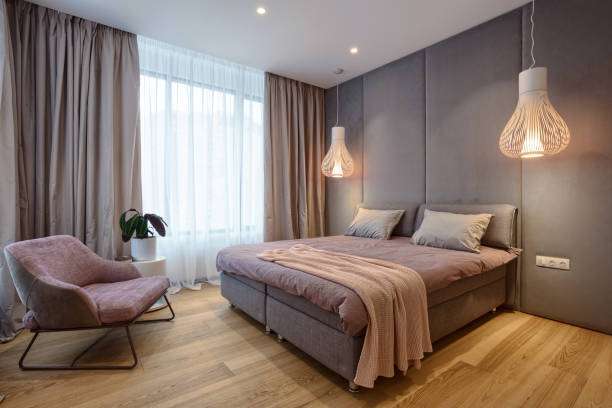
The shape of lampshades directly affects the intensity of glare. Hemispherical lamp shades concentrate light while retaining some soft side lighting, commonly found in restaurants and studies, providing ample brightness without being glaring. Conical lamp shades offer strong light blocking, suitable for work areas and bars where bright but controlled lighting is needed. Cylindrical or columnar lamp shades tend to blend vertical lighting with ambient light, creating a relaxing atmosphere.
What truly determines comfort is the shading angle of the lamp shades. The larger the shading angle, the lower the chance that the human eye will directly see the light source, and the less glare there will be. Professional lighting design typically requires a shading angle of no less than 30°, which is a basic guarantee to avoid glare. In other words, the quality of a design is not in brightness, but in “whether the light source is invisible.”
4. Scientific material selection: Soft light is not dark light
lamp shades determine how light is emitted. Frosted glass evenly scatters light, creating a delicate and soft glow, making it the top choice for preventing glare. Fabric lamp shades diffuse light through the microporous structure of the fabric fibers, making them suitable for bedrooms and relaxation areas, creating a sense of envelopment. While metal lamp shades are highly reflective, a matte or sandblasted inner finish can effectively control reflected glare. Acrylic and resin lamp shades have high light transmittance, but improper thickness or distance from the light source can easily create localized bright spots, actually increasing glare.
Soft light doesn’t mean dim light. True anti-glare design ensures sufficient illumination while distributing light more evenly. Good lamp shades maintain brightness while allowing the edges of the light to blend naturally, preventing the eyes from feeling pierced.
5. Glare control in space: a visually-based lighting strategy
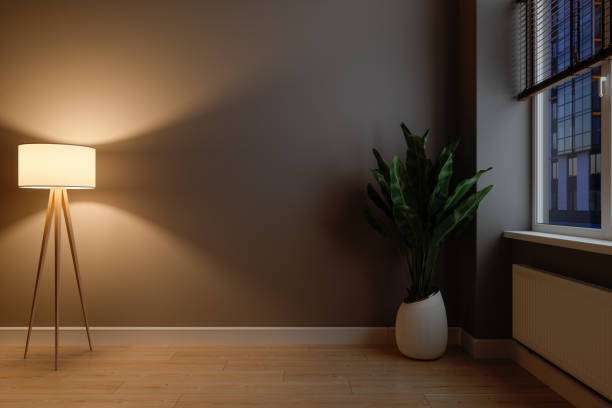
Different spaces have different tolerances for glare. In a dining room, where lights are often near eye level, downlighting lamp shades best balance brightness and comfort. Bedrooms require a relaxing atmosphere, so fabric or frosted lamp shades can envelop the entire space in light. Work areas emphasize focused lighting, so deep bowl-shaped lamp shades or lamps with honeycomb anti-glare structures can improve focus without causing fatigue.
In higher-level design, lamp shades often work in conjunction with multiple light sources. Designers utilize walls, ceilings, or floors as “secondary reflective surfaces,” softening the light before it enters the field of vision. This “indirect lighting” is more natural than a single light source and produces almost no noticeable glare.
6. The Future of Lighting: New Directions in Anti-Glare Design
With advancements in lighting technology, anti-glare design is extending from the physical form of lamp shades to the microscopic optical level. Structures such as honeycomb grids and microlens diffusers are being applied inside luminaires, allowing for precise control of light before it is emitted. Simultaneously, intelligent dimming systems can automatically adjust light intensity and color temperature based on ambient brightness, ensuring the light remains within a comfortable range.
Future lamp shades will not be just physical shells, but “optical adjustment devices.” They will no longer passively block light but actively participate in the lighting logic, allowing the space to find an ideal balance between light and dark.
7. Conclusion: Let light serve people, not fight against them.
The essence of glare is the lack of order in light. The significance of lamp shades lies in taming light, creating a controllable balance between brightness, direction, and reflection. It is both a decoration and an optical system, allowing people to focus, rest, and live under light without being stimulated.
Understanding where glare comes from allows for more informed decisions when choosing and setting up lights. True soft light comes not from blocking, but from control. The value of lamp shades lies in giving light warmth and dimension, making the space comfortable both visually and emotionally.