Minimalism is not coldness: How lamp shades convey warmth and intimacy with soft light

Lamp shades, as “secondary mediators” of light, are the key to this warmth. In the eyes of many, “minimalism” is often equated with “coldness,” “rationality,” and “alienation.” Clean lines, pure colors, and restrained decoration can seem to transform life into a low-temperature art exhibition. However, truly mature minimalist design goes beyond formal “minimalist” to achieve emotional warmth within simplicity through the relationship between light, material, and space.
1. The Power of Soft Light: The Emotional Interface of Minimalist Space
In the context of minimalism, lamp shades are no longer used for decoration but to regulate light. Like a filter, they create a buffering bridge between the light source and space.
Human perception of light is not rational. Psychological research shows that soft, diffused light can evoke a sense of security and closeness, while strong, direct light can create a sense of distance and oppression.
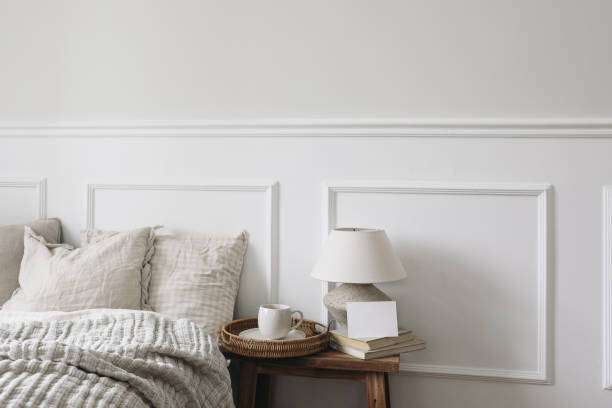
Therefore, the key to conveying warmth in a minimalist lampshade lies in how it “tames” light. Opalescent glass, frosted acrylic, fine-grained fabric, and light-colored ceramic—these materials subtly diffuse light, softening the edges of shadows and enveloping the space in a “boundless brightness.” It’s neither glaring nor dazzling, yet it evokes a sense of being gently embraced by light.
2. Material and touch: Where does the “skin feel” of light come from?
Minimalism emphasizes purity, but purity doesn’t equate to monotony. The material of lamp shades is the first layer of skin that shapes the perception of light. Imagine light filtering through frosted glass, creating a slight blur. That “blur” is the source of warmth—it softens the visual experience and creates a physically relaxing response to the space.
In design psychology, there’s a concept called “Visual Tactility,” which refers to the way people associate tactile experiences through vision. When you see a delicate, matte ceramic lampshade, you “feel” its warmth; when the surface of the lampshade has a slight fiber texture, you “imagine” the softness of the fabric. This perception doesn’t require actual touch, but it can evoke an emotional closeness. The texture of minimalist lamp shades is often achieved not through decoration, but through “surface texture” and “interaction of light.”
3. The psychology of color temperature: warm white light and spatial intimacy
Soft lighting relies not only on the material of lamp shades; the choice of color temperature also determines the emotional temperature of a space. Excessively cold light (above 6000K) can easily make a space appear rational, clean, and harsh; on the other hand, a neutral or slightly warm color temperature (2700K–3500K) can create a softer, homey atmosphere.
In minimalist styles, designers often create layers by manipulating color temperature gradients: using a slightly warm white for the main light, while wall or table lamps opt for a softer warm yellow, creating a visual “temperature range” in the space. This subtle variation transforms minimalism from a monotonous “white and gray” into a perceptible “breath of cool and warm.” Lampshades filter and restructure the colors of light, allowing it to flow more naturally through the reflections of materials.
4. Form and Boundary: Intimacy in White Space
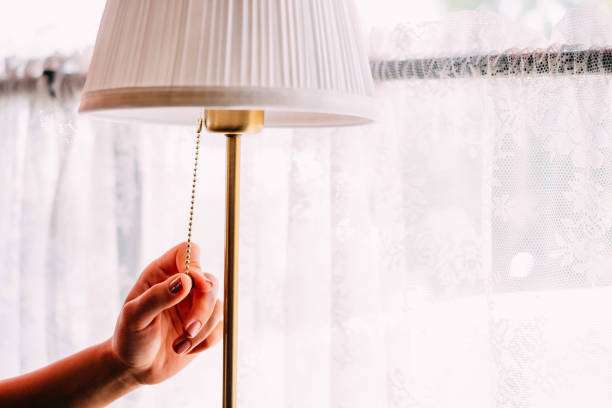
Minimalist lamp shades often feature simple forms—circles, ellipses, cylinders, or hemispheres. These geometric shapes psychologically symbolize “envelope” and “stability.” Rounded edges are more easily accepted than sharp lines because they resemble natural forms and elicit a subconscious sense of comfort.
When designing minimalist lamp shades, designers often enhance this sense of intimacy through “proportion” and “white space.” Lampshades don’t dominate the space but rather allow every inch of light and shadow to “breathe.” When you walk into a minimalist space and see a quietly glowing spherical lamp, it feels like a gentle, suspended planet, imbuing the calm space with a human touch.
5. The Emotional Philosophy of Minimalist Design: From Control to Feeling
True minimalism isn’t about “eliminating emotion” but rather “refining emotion.” Stripped of ornamentation, light, texture, and proportion become the sole narrative language. A well-executed minimalist lampshade doesn’t rely on a plethora of details but rather on precise control of light and shadow, creating a subtle resonance through psychological rhythm.
The ultimate goal of design is never form, but rather a transformation of experience. When light softly spreads across wooden tables, fabric sofas, and even skin, it creates not brightness but a feeling of being understood—the true warmth of minimalism.
Conclusion
Removing decoration doesn’t eliminate texture. On the contrary, it’s redefined. The quality of minimalist lamp shades comes from the gentleness of light, the breadth of materials, and the balance of space. When designers learn to imbue light with emotion, minimalism ceases to be synonymous with coldness and becomes a way to make life more peaceful and intimate.